SPECIAL SESSION #13
Closing yield gaps in a changing climate: data-driven modeling and digital agriculture approaches
ORGANIZED BY
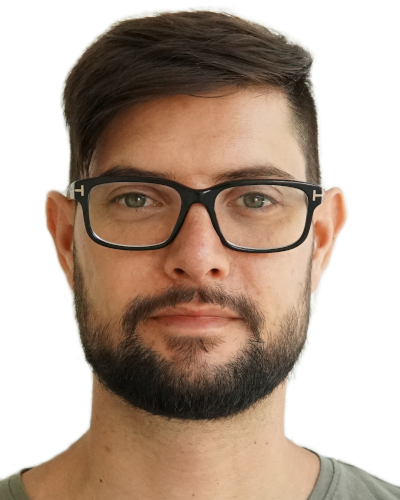 Matteo Francioni
Matteo Francioni
Polytechnic University of Marche, Department of Agricultural, Food and Environmental Sciences, Italy
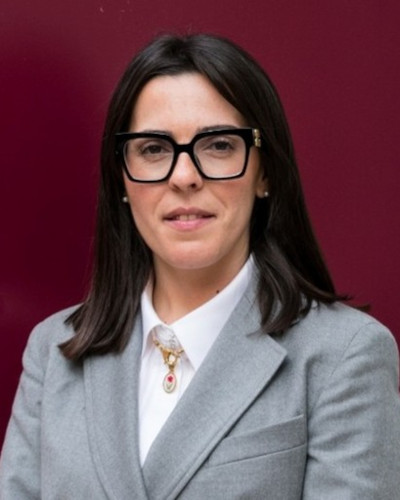 Chiara Rivosecchi
Chiara Rivosecchi
Polytechnic University of Marche, Department of Agricultural, Food and Environmental Sciences, Italy
 Adriano Mancini
Adriano Mancini
Polytechnic University of Marche, Department of Information Engineering, Italy
SPECIAL SESSION DESCRIPTION
Food loss and waste represent a major global challenge, contributing to environmental degradation and threatening food security across its four dimensions (availability, access, utilization, and stability). Enhancing agricultural productivity on existing croplands, particularly by closing yield gaps, is therefore a key strategy to meet growing food demand while avoiding unsustainable land expansion. In this context, accurate yield prediction and the ability to support timely, informed decisions are essential for resilient and sustainable agricultural systems under climate change.
Recent advances in digital agriculture have enabled a new generation of data-driven modeling approaches, where crop growth models are increasingly combined with machine learning techniques, multi-source data, and real-time observations. The integration with sensing technologies, including satellite, UAVs, proximal sensors, and IoT-based monitoring systems, provides continuous, spatially explicit information on crop conditions. These data streams enhance model calibration, reduce uncertainty, and enable dynamic updating of simulations through data assimilation and model–data fusion approaches.
Such integrated frameworks are key enablers of decision support systems for agriculture, allowing stakeholders to optimize management practices, improve resource use efficiency (e.g. water, nutrients), and anticipate climate-related risks. By linking process-based understanding with data-driven insights, these approaches support scalable and operational solutions for yield gap analysis, yield forecasting, and adaptive management across different agricultural systems and spatial scales.
We welcome contributions that advance data-driven agricultural modeling, the integration of sensing technologies, and the development of decision support systems for managing yield gaps under changing environmental conditions. The session aims to foster interdisciplinary collaboration across modeling, sensing, and digital agriculture communities, promoting innovative solutions for climate adaptation, sustainable intensification, and improved agro-ecosystem resilience.
TOPICS
Topics include, but are not limited to:
- Data-driven crop modeling and hybrid approaches: integration of process-based models with machine learning and ai;
- Yield gap analysis and yield prediction: data-driven methods across spatial and temporal scales;
- Integration with sensing technologies: satellites, UAVs, proximal sensing, and IoT data for model calibration and monitoring;
- Data assimilation and model–data fusion: reducing uncertainty and enabling real-time model updating;
- Decision support systems for climate-resilient agriculture: tools for farm management, resource optimization, and risk assessment;
- Multi-scale modeling and scaling issues: bridging plot, field, and regional applications;
- Integration of radiative transfer models and crop growth models;
- Modelling soil carbon sequestration, evaluating mitigation practices (e.g., cover crops, biochar, conservation tillage), and quantifying CO₂, N₂O, and CH₄ emissions across agricultural systems under different climate and management scenarios.
ABOUT THE ORGANIZERS
Matteo Francioni is a researcher at the Department of Agricultural, Food and Environmental Sciences (D3A), Polytechnic University of Marche (UNIVPM). He conducted postdoctoral research in Italy and Japan (NIAES–NARO). His work focuses on ecosystem services, including soil carbon dynamics, biodiversity, soil fertility, and crop production. His research covers biochar application, greenhouse gas emissions, biodegradable plastics, nutrient cycling, crop stress, cover crops, and carbon farming. He teaches Environmental Agronomy and Weed Management and Experimental Agronomic Methodology. He has contributed to several national and international projects, authored over 30 peer-reviewed papers, and regularly reviews for scientific journals.
Chiara Rivosecchi is a young researcher at the Department of Agricultural, Food and Environmental Sciences (D3A), Polytechnic University of Marche (UNIVPM). She earned her PhD in the National Doctorate in Earth Observation from Sapienza University of Rome, including a 7-month secondment at the UAV Research Center, Ghent University (Belgium). Her work focuses on precision agriculture, including drone-based photogrammetry, crop monitoring, and agronomic management. Her research investigates the effects of biotic and abiotic stresses on crop yield, analyzing yield gaps and integrating remote sensing approaches. She participated in national and international projects and conferences. She has published 6 indexed journal articles, 1 full conference paper, and 1 conference abstract, and delivered 2 oral presentations at international conferences.
Adriano Mancini is an Associate Professor at the Department of Information Engineering (DII), Faculty of Engineering, Polytechnic University of Marche (UNIVPM). He teaches Fundamentals of Computer Science and Advanced Programming and co-directs the VRAI – Vision, Robotics & Artificial Intelligence Lab. His main research activities focus on artificial intelligence with applications in mobile robotics, image and video analysis, and remote sensing using multi- and hyperspectral payloads within the frameworks of Agriculture 4.0 and Industry 4.0. He is involved in several regional, national, and European research projects and is co-founder of two university spin-offs. He has authored more than 230 papers in international journals and conference proceedings.