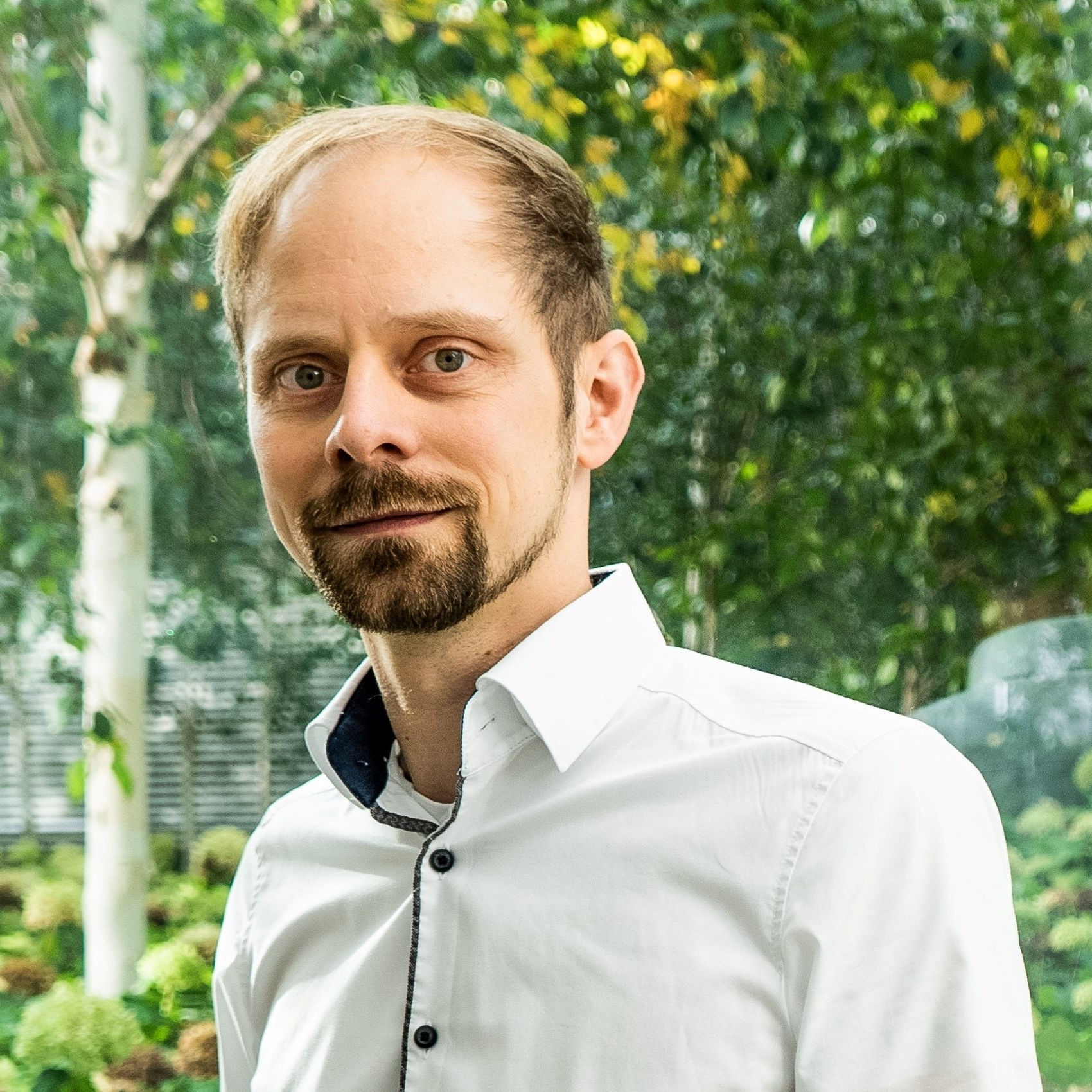
 Dag Heinemann
KEYNOTE LECTURE
Theory and Employment of Optical Methodology in Plant Analysis
Dag Heinemann
Leibniz University Hannover, Germany
ABSTRACT
Light is fundamental to plant life, most prominently through its role in photosynthesis and the regulation of plant development. At the same time, the interaction of light with plant tissues carries a wealth of information about their structural, chemical, and physiological properties. Understanding these interactions therefore provides the physical basis for using optical measurements to assess plant condition in a non-destructive and mostly non-invasive manner.
When light encounters plant tissue, the interactions may involve absorption, reflection, transmission, or scattering. Scattering can occur elastically, without a change in photon energy, or inelastically, providing information on molecular composition and dynamics. In addition, the polarization state and spectral distribution are affected by tissue structure and composition. Each of these interactions probes different aspects of the plant and can therefore provide distinct, and often complementary, information on parameters ranging from tissue morphology and water status to biochemical composition and physiological responses.
A broad range of optical methodologies has been developed to access this information. These range from conventional imaging and reflectance-based approaches to hyperspectral imaging, optical coherence tomography, polarimetric techniques, and vibrational and mechanical spectroscopies such as Raman and Brillouin spectroscopy. The physical principles underlying these methods will be outlined, and their potential for deriving biologically meaningful information will be illustrated using selected examples.
Linking fundamental light–tissue interactions with current and emerging measurement technologies provides a framework for understanding both the capabilities and limitations of optical methodology in plant analysis and its potential for future applications in horticulture, agriculture, and plant science.
SPEAKER BIOGRAPHY
Since 2020, Prof. Dag Heinemann has headed the Phytophotonics Department at the Institute of Botany and the Hannover Centre for Optical Technologies, Leibniz University Hannover. His research focuses on light–matter interactions for optical sensing and laser processing of plant tissues, with particular emphasis on translating fundamental photonic principles into new approaches for plant analysis and phenotyping. His research interests include optical spectroscopy, optical coherence tomography, polarimetric imaging, and laser-based methods for investigating the structural, mechanical, and physiological properties of plants.
His work is characterized by a strongly interdisciplinary approach at the interface of plant science, horticulture, and optical technologies, ranging from fundamental studies of light–tissue interactions to the development of sensing concepts for laboratory and field applications. He is a member of the Cluster of Excellence PhoenixD – Photonics, Optics, and Engineering – Innovation Across Disciplines, where he serves as Venture Leader for “Photonic Innovations for Environmental Sustainability” and contributes to interdisciplinary research on integrated optical technologies. He also serves as chair of the “Photonic Technologies in Plant and Agricultural Science” conference, fostering the exchange between the photonics, plant science, and agricultural research communities.