SPECIAL SESSION #06
Advanced Sensing in Agriculture
ORGANIZED BY
 Michael Bleier
Michael Bleier
Julius-Maximilians-Universität Würzburg
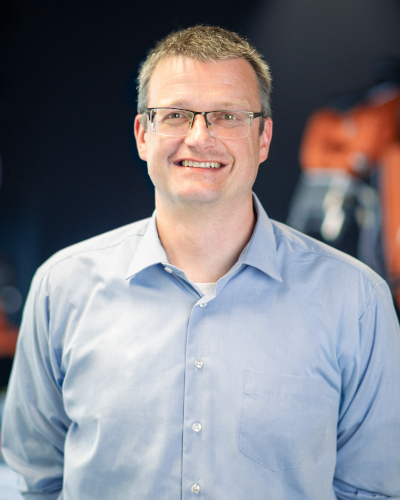 Andreas Nüchter
Andreas Nüchter
Julius-Maximilians-Universität Würzburg and Zentrum für Telematik e.V.
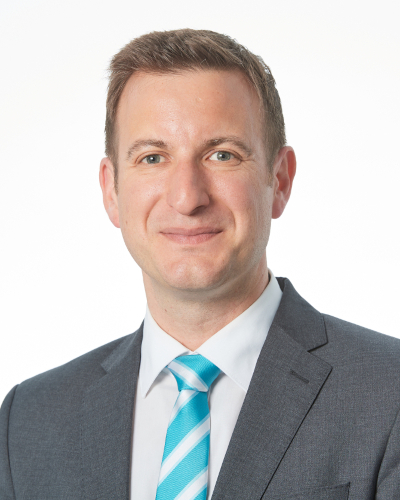 Cyrill Stachniss
Cyrill Stachniss
Universität Bonn
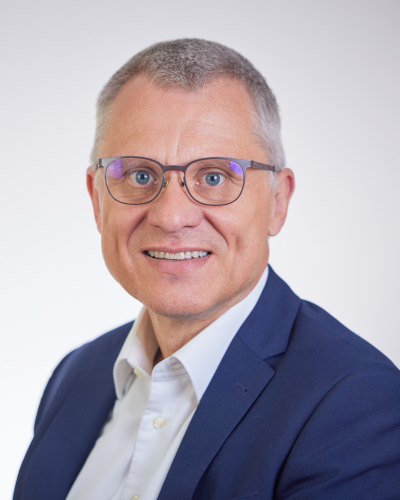 Heiner Kuhlmann
Heiner Kuhlmann
Universität Bonn
SPECIAL SESSION DESCRIPTION
This special session invites original research contributions addressing the robotics and metrological challenges and advances in sensing technologies as well as sensor data interpretation for agricultural systems using mobile autonomous systems.
As agriculture becomes more dependent on data acquired from various semi-autonomous and autonomous sensing platforms, it is essential to ensure the accuracy, traceability, comparability, and uncertainty awareness of measurements for reliable decision-making and scientific reproducibility.
We invite original research contributions addressing the robotics and metrological challenges and advances in sensing technologies as well as sensor data interpretation for agricultural systems using mobile autonomous systems.
As agriculture becomes more dependent on data from various semi-autonomous and autonomous sensing platforms, it is essential to ensure the accuracy, traceability, comparability, and uncertainty awareness of measurements for reliable decision-making and scientific reproducibility.
Concurrently, machine learning and data-driven methods are being used more frequently to extract information from high-dimensional sensing data acquires by mobile systems. This raises new questions related to training data quality, sensor bias propagation, model robustness and explainability, and the impact of measurement uncertainty on algorithm performance and generalization.
Our goal is to provide a forum where researchers and practitioners at the intersection of robotics, agricultural sensing, and measurement science can present innovations, methodologies, and validation approaches that strengthen the metrological foundations of sensing in agriculture.
This session aims to stimulate discussion on standards, best practices, and validation frameworks that support trustworthy agricultural sensing data by bringing together the sensing (ground-based, airborne, and satellite), computer vision, robotics, and metrology communities.
The session seeks to advance precision and digital agriculture by promoting sensing systems and methodologies based on sound measurement principles. This enables reproducible research outcomes and robust deployment in real-world agricultural settings.
TOPICS
We welcome contributions that cover the following topics:
- Optical and Vision-Based Sensing
- RGB, multispectral, hyperspectral, and thermal imaging for crop and soil monitoring
- RGB-D cameras and depth sensing for plant structure, biomass, and canopy characterization
- Image processing and computer vision techniques for agricultural sensing applications
- Laser and 3D Sensing Technologies
- Terrestrial and mobile 3D laser scanning systems for crop, canopy, and orchard characterization
- LiDAR-based sensing for plant geometry, volume estimation, and structural analysis
- Point cloud processing and 3D reconstruction methods in agricultural environments
- Remote and Airborne Sensing
- UAV-based sensing systems for high-resolution agricultural monitoring
- Satellite imagery analysis for large-scale crop assessment and spatial variability mapping
- Multi-scale data integration between proximal, airborne, and satellite sensors
- Sensor Data Processing and Fusion
- Fusion of multi-modal sensing data (vision, depth, laser, spectral)
- Spatiotemporal data analysis and feature extraction from sensor-rich agricultural systems
- Calibration, validation, and uncertainty analysis of agricultural sensing systems
- Applications and Case Studies
- Crop growth monitoring, stress detection, and phenotyping through sensing technologies
- Sensing-driven assessment of yield components and spatial variability
- Field, greenhouse, and orchard-based sensing deployments and experimental platforms
ABOUT THE ORGANIZERS
Michael Bleier is a postdoctoral researcher at the Robotics Lab of the Julius-Maximilians-Universität Würzburg. He specializes in developing and calibrating optical sensor systems, including 3D reconstruction and mapping approaches, for uncooperative environments. His research on sensor systems and algorithms for 3D perception has applications in underwater metrology, industrial inspection, and plant monitoring. As an instructor, he teaches hands-on courses in sensor data processing in the Satellite Technology graduate program, which is supported by the Elite Network of Bavaria.
Andreas Nüchter is professor and chair of robotics at University of Würzburg, vice president of the research institute Zentrum für Telematik e.V. (Center for Telematics) and Hi!Paris visitng chair at ENSTA (École nationale supérieure de techniques avancées). Prior he was an assistant professor at Jacobs University Bremen, a research associate at University of Osnabrück, and a PhD student at Fraunhofer Institute for Autonomous Intelligent Systems (AIS, Sankt Augustin). His main research interests include reliable robot control, precise 3D environment mapping, 3D vision, and laser scanning technologies for various applications, e.g., for planetary exploration, safety security and rescue robotics, or underwater inspection.
Cyrill Stachniss is a full professor at the University of Bonn and heads the Photogrammetry and Robotics Lab. He is also with the Lamarr Institute for Machine Learning and Artificial Intelligence and was a visiting professor in engineering at the University of Oxford until 2025. Before his appointment in Bonn, he was with the University of Freiburg and ETH Zurich. Since 2010, he has been a Microsoft Research Faculty Fellow and received the IEEE RAS Early Career Award in 2013. From 2015 to 2019, he was senior editor for the IEEE Robotics and Automation Letters. He is the spokesperson of the DFG Cluster of Excellence "PhenoRob - Robotics and Phenotyping for Sustainable Crop Production" at the University of Bonn, together with his colleague Heiner Kuhlmann. Both are leading the Cluster of Excellence from 2019 to 2032. Cyrill's research focuses on probabilistic techniques as well as learning approaches for mobile robotics, perception, and navigation. The main application areas of his research are autonomous service robots, agricultural robotics, and self-driving cars. He has co-authored over 350 publications and has coordinated multiple large-scale research projects on the national and European levels. Besides his university involvement, he cofounded three startups: Escarda Technologies, DeepUp, and PhenoInspect.
Heiner Kuhlmann is a full professor for geodesy and managing director of the Institute of Geodesy and Geoinformation at the University of Bonn. Before his appointment in Bonn, he was with the University of Stuttgart and Hannover. He is the spokesperson of the DFG Cluster of Excellence "PhenoRob - Robotics and Phenotyping for Sustainable Crop Production" at the University of Bonn, together with his colleague Cyrill Stachniss. Both are leading the Cluster of Excellence from 2019 to 2032. Heiner's research focuses on kinematic multi-sensor-systems, laser scanning, GNSS, and Quality assurance of geodetic measurement techniques. The main application areas of his research are sustainable crop production and infrastructue monitoring. He has co-authored over 300 publications and has coordinated multiple large-scale research projects. Besides his university involvement, he cofounded the startup DeepUp.