SPECIAL SESSION #03
Proximal Soil Sensing: From Sensors to Decision Making
ORGANIZED BY
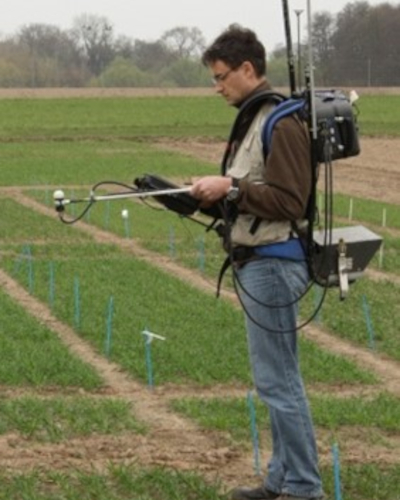 Robin Gebbers
Robin Gebbers
Leibniz Institute for Agricultural Engineering and Bioeconomy, Germany
 Sebastian Vogel
Sebastian Vogel
Leibniz Institute for Agricultural Engineering and Bioeconomy, Germany
 Hamed Tavakoli
Hamed Tavakoli
Leibniz Institute for Agricultural Engineering and Bioeconomy, Germany
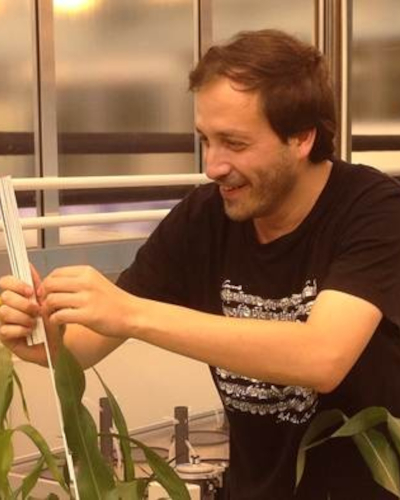 José Correa Reyes
José Correa Reyes
Leibniz Institute for Agricultural Engineering and Bioeconomy, Germany
SPECIAL SESSION DESCRIPTION
This session covers recent developments in proximal soil sensing and their applications in precision agriculture and precision horticulture. Proximal soil sensing should contribute to the efficiency and sustainability of plant production. It refers to sensing systems which analyze soils on-site within a measurement distance of up to 2 m. These sensing systems comprise sensors and other components, such as sensor heads, calibration methods, or extractors, which facilitate the quantification of soil fertility parameters and the integration of sensor readings into decision making on fertilization, irrigation, plant protection and other management measures. Soil fertility parameters are physical, chemical, and biological soil properties that affect crop yield, health, and quality as well as the deployment of machinery and environmental impacts by plant production. Soil sensing systems can be stationary, for monitoring tasks, or mobile, for soil mapping. On-site soil sensing is challenging because soils are complex objects which are difficult to access due to their inherent mechanical resistance and spatio-temporal variability whereas the target properties are sometimes not well described even by the laboratory-based reference methods. While on-site sensing of soil water content, salinity, texture, pH, and organic matter is well established there is a lack of reliable and efficient methods for assessing important chemical, e.g., NO3 and PO4, and biological parameters. Researchers and engineers are called to develop efficient systems for sensing these critical soil properties and to demonstrate their utility in practice.
TOPICS
We welcome contributions that address the following topics:
- Soils sensors: New soil sensors, particularly for NO3, PO4, and biological soil properties; deeper understanding of sensor response.
- Sensing systems: platforms (including robots) and their components such as sensor heads, soil extraction units.
- Algorithms for data processing and estimation: E.g., sensor calibration, data cleaning, sensor data fusion for estimating chemical properties (e.g., NO3, PO4), biological properties (e.g., respiration, N mineralization); estimation error description and error propagation.
- Evaluation: Comparison of sensors and systems; robustness, performance, and economics of proximal soil sensing
ABOUT THE ORGANIZERS
Robin Gebbers is an agronomist by training and does research within the Proximal Soil Sensing working group of the Department of Agromechatronics at the Leibniz Institute for Agricultural Engineering and Bioeconomy (ATB).
Sebastian Vogel is a geoecologist and soil scientist and works as a senior scientist in the working group Proximal Soil Sensing of the Department of Agromechatronics at the Leibniz Institute for Agricultural Engineering and Bioeconomy (ATB).
Hamed Tavakoli is an agricultural engineer and works as a scientist within the Proximal Soil Sensing working group of the Department of Agromechatronics at the Leibniz Institute for Agricultural Engineering and Bioeconomy (ATB). His research focuses on proximal soil sensing, soil spectroscopy, and the development of single- and multi-sensor systems for digital soil mapping.
José Correa is an agronomist by training and he conducts research in the Proximal Soil Sensing working group of the Department of Agromechatronics at the Leibniz Institute for Agricultural Engineering and Bioeconomy (ATB). He is specialized in root systems analysis and currently works on machine learning for soil sensor calibration and fluorescence spectroscopy.