FARMING PERSPECTIVES
IEEE MetroAgriFor 2026 will feature two Impulse Presentations - inspiring talks designed to stimulate discussion and provide fresh perspectives on the future of agriculture and food systems.
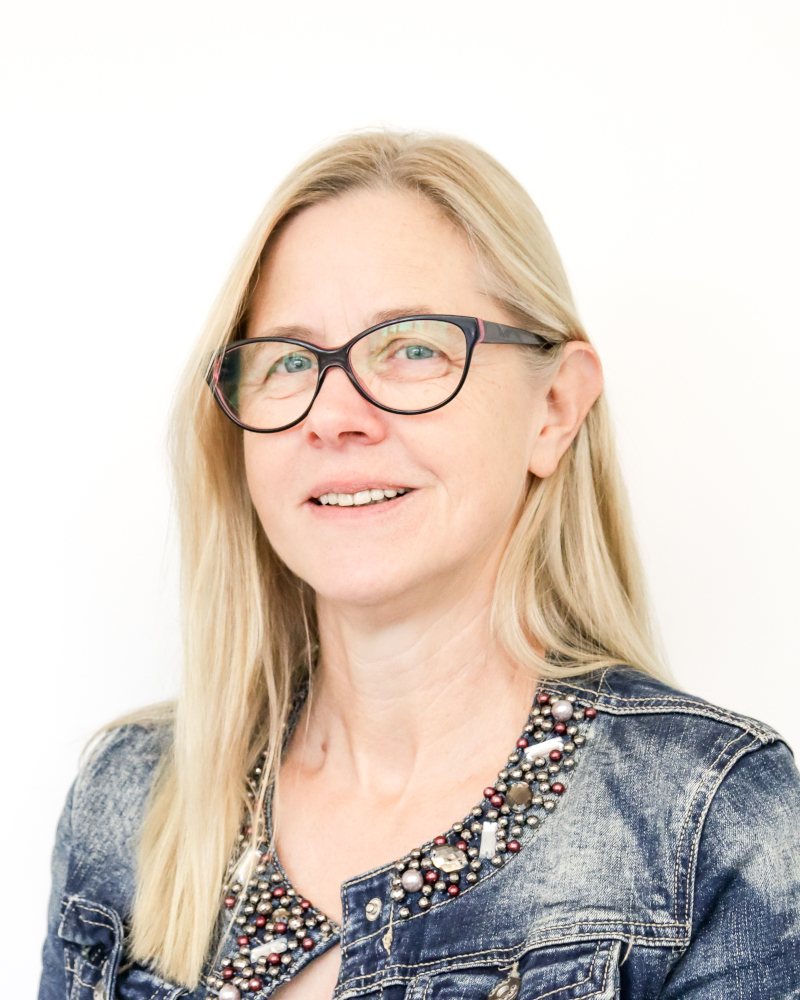 Monika Schreiner
Agrifood Systems of the Future
Monika Schreiner
Leibniz Institute of Vegetable and Ornamental Crops e.V., Germany
ABSTRACT
The profound transformation of agricultural systems represents one of the central scientific, technological, and societal challenges of the twenty-first century. The visionary programme Agricultural Systems of the Future directly addresses these complex and interrelated challenges. Within this initiative, agricultural systems are being conceptually rethought and strategically redesigned to support the transformation towards sustainable, resilient, and responsible agricultural systems that place both people and the environment at their centre.
Particularly promising opportunities for successfully transforming agricultural systems towards greater sustainability and resilience lie in the field of converging technologies. Such transformation can only be achieved through the integration of forward-looking technologies. The greatest potential for disruptive innovation and novel applications emerges at the interfaces between artificial intelligence (AI) and agricultural and food sciences, robotics and ecosystem research, smart technologies in agriculture and plant and animal sciences. These technological convergences enable the development of intelligent, adaptive, and resource-efficient agricultural systems by combining data-driven decision making, automation, advanced sensing technologies, and biological knowledge within integrated system approaches.
The project food4future illustrates the transformative potential of converging technologies. Selected examples from the ongoing food4future project demonstrate how technological convergence can accelerate innovation, foster sustainable food production, and contribute to the resilience and future viability of agricultural systems.
SPEAKER BIOGRAPHY
Research profile | As agricultural scientist, my basic research interest is the study of the plant secondary metabolism in order to optimize the concentration and composition of certain protective plant secondary metabolites taking the plant-environment interaction into account. Working at the plant-human interfaces, additionally, I investigate the nutritious potential of alternative food sources (algae, halophytes, jellyfish, crickets and underutilized crops) for the generation of sustainable, healthy and nutritious food products with a desired metabolite profile. For transforming agricultural systems sustainable agrifood new cultivation protocols and new cultivation systems for sustainable, urban, indoor production for saline organisms in single and co-cultivation have been developed. My research work is published in more than 200 scientific articles (ORCID 0000-0002-5629-4429).
Vision & Motivation | My vision are nutritious and healthy foods from diverse food sources for all at any time, produced in fair and sustainable food systems for healthy people within the planetary boundaries. I am motivated by a global challenge - the urgent need to shift to more plant-based healthy diets and to more sustainable agri-food systems leading to food security for all.
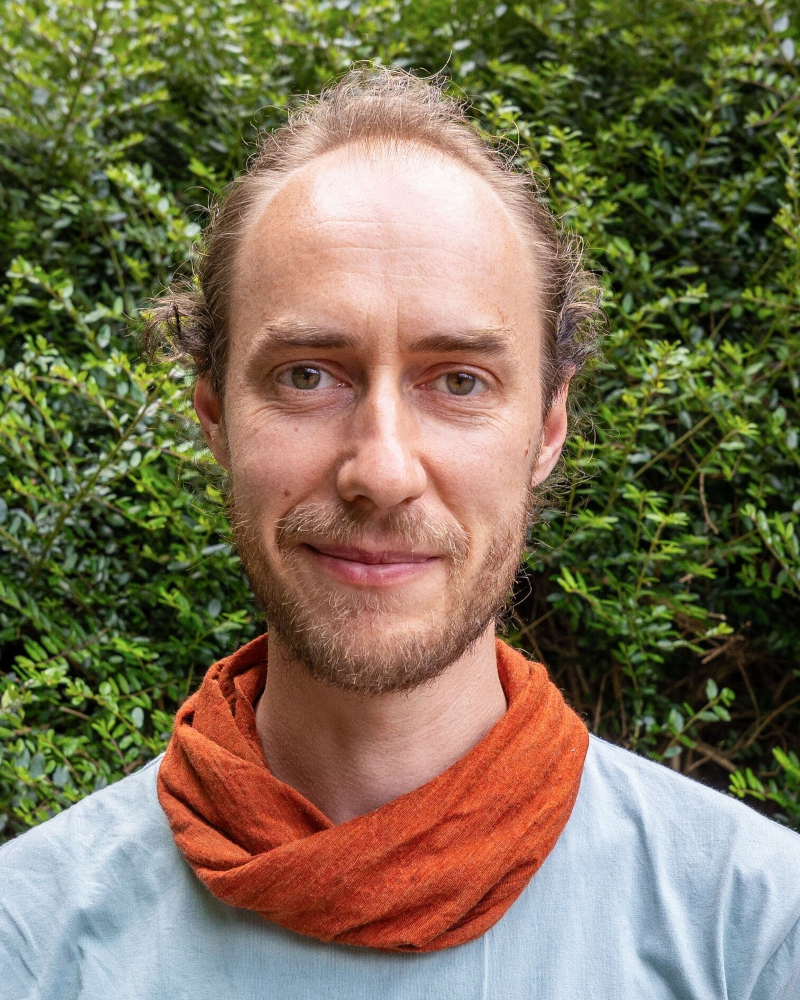 Paul Hofmann
Robotics for Agroecosystem Diversification: Managing Complexity in Future Farming
Paul Hofmann
Max Planck Institute for Intelligent Systems & ELLIS Institute Tübingen gGmbH
ABSTRACT
Modern agriculture has been optimized around uniform crops, large fields and specialized machinery. While this has greatly increased labour productivity, it has also reinforced ecological simplification and dependence on external inputs. More diversified agroecosystems could strengthen resilience and provide multiple ecosystem services, but so far they have not scaled widely because their complexity remains difficult to manage competitively with conventional machinery. Recent advances in computer vision and Physical AI open a new pathway. Rather than continuing to simplify ecosystems to fit the limitations of agricultural machinery, we can begin to ask a more ambitious question: how much diversity and complexity is actually optimal for productive and resilient agroecosystems if a new generation of small, highly versatile robots can manage them? Our research explores highly diversified agroforestry systems that can be integrated incrementally as multifunctional strips within existing farms, enabling a gradual transformation. High-resolution sensing and computer vision capture plant performance, soil dynamics, biodiversity and greenhouse gasses. These data can feed digital twins that help interpret ecological interactions. Flexible robotic platforms can then translate these insights into precise, site-specific action at single plant level. This will shift agriculture from uniform toward adaptive robotic precision management in heterogeneous agroecosystems. Co-developed with farmers and stakeholders in living labs and lighthouse farms in Germany, this approach aims to make the ecological complexity of highly diversified systems manageable, economically viable and scalable - and to unlock agricultural systems in which productivity, biodiversity, resilience and ecosystem regeneration reinforce rather than constrain one another.
SPEAKER BIOGRAPHY
In his work, Paul Hofmann bridges agroecological scientific research, technological expertise in robotics and AI, as well as innovative agricultural practice, building on extensive hands-on experience in regenerative agriculture, agroforestry, and stakeholder-driven innovation. At the Max Planck Institute for Intelligent Systems and the ELLIS Institute Tübingen, he develops transdisciplinary research at the intersection of agroecology, ecophysiology, artificial intelligence, robotics, computer vision, and the social sciences. His current work focuses on building an interdisciplinary, impact-driven research initiative on highly diversified agroecosystems enabled by versatile robotics, translating basic research from the three clusters of excellence TERRA, Future Forest, and Machine Learning into practical applications and future spin-off activities for the transformation of agriculture. He studied agriculture, ecology, and forestry, with a strong focus on organic and regenerative production systems. Before moving into his current research role, he co-founded Hof Sonnenwald, a pioneering regenerative agroforestry farm in Germany, and helped develop it into a nationally recognized model, demonstration, and education farm. He also established a model region for climate-friendly and regenerative agriculture and agroforestry at the Black Forest Nature Park. In addition, he hosts the Farmvision podcast with WirLandwirten, exploring pathways toward the future of agriculture.