SPECIAL SESSION #12
Low-Cost Intelligent Remote Sensing Systems for Precision Agriculture: Satellite, UAV, and Embedded Technologies
ORGANIZED BY
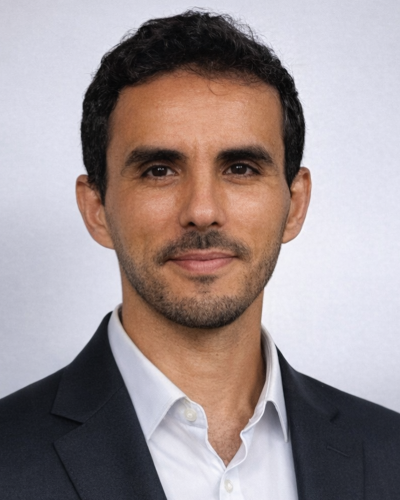 Wissam Jenkal
Wissam Jenkal
Listi Lab, Ensa Agadir, Ibnou Zohr University, Morocco
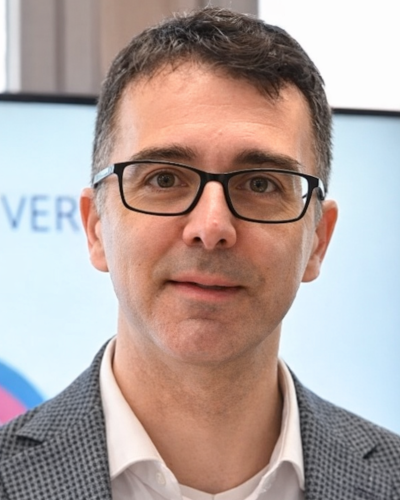 Luca De Vito
Luca De Vito
University of Sannio, Italy
 Amine Saddik
Amine Saddik
Listi Lab, Ensa Agadir, Ibnou Zohr University, Morocco
SPECIAL SESSION DESCRIPTION
Recent advances in remote sensing technologies are transforming precision agriculture by enabling large-scale, accurate, and real-time monitoring of agricultural systems. Satellite imagery, unmanned aerial vehicles (UAVs), and intelligent embedded sensing platforms provide valuable information for crop monitoring, environmental assessment, and decision support in modern farming. This special session aims to explore innovative approaches that combine satellite data, drone-based sensing, and low-cost intelligent embedded systems to support a wide range of agricultural applications. These technologies allow efficient monitoring of crop growth, plant health, soil conditions, irrigation management, and environmental stress factors. In addition, the integration of artificial intelligence, machine learning, and edge computing enables advanced data processing and real-time decision-making for sustainable and efficient agricultural practices. The session encourages contributions presenting novel sensing technologies, data processing methods, and practical field applications that improve agricultural productivity while reducing operational costs. Particular interest is given to low-cost and scalable solutions suitable for large-scale agricultural monitoring and deployment in developing regions.
TOPICS
Topics include, but are not limited to:
- Remote Sensing for Precision Agriculture:
- Satellite-based crop monitoring and agricultural mapping;
- Multi-spectral and hyperspectral imaging in agriculture;
- Vegetation indices and crop health monitoring;
- Satellite data fusion and time-series analysis.
- UAV and Drone-Based Agricultural Monitoring:
- Drone-based remote sensing for crop monitoring;
- UAV imaging for disease detection and stress monitoring;
- High-resolution aerial mapping for agricultural applications;
- Drone-based phenotyping and field monitoring.
- Intelligent Embedded and Low-Cost Sensing Systems:
- Low-cost embedded systems for agricultural monitoring;
- IoT and wireless sensor networks in agriculture;
- Edge computing for real-time agricultural applications;
- Energy-efficient sensing platforms for field deployment.
- AI and Data Analytics for Smart Agriculture:
- Machine learning for agricultural monitoring;
- Deep learning for crop classification and disease detection;
- Multimodal data fusion (satellite, drone, IoT sensors);
- Decision support systems for precision farming.
- Applications in Smart Farming:
- Crop growth monitoring and yield prediction;
- Biomass estimation and vegetation analysis;
- Irrigation monitoring and water management;
- Soil moisture and soil health monitoring;
- Early detection of crop diseases and pests;
- Climate and environmental impact monitoring.
ABOUT THE ORGANIZERS
Prof. Wissam Jenkal is a Moroccan academic and researcher in embedded systems and information technologies, currently serving as a Habilitated Associate Professor at ENSA Agadir, Ibn Zohr University. He is the coordinator of the Mechatronics and Automotive Technologies (MTA) engineering programme and the head of the LISTI Laboratory (Engineering Systems and Information Technologies Laboratory), where he leads academic and research initiatives at the intersection of engineering, digital technologies, and intelligent systems.
His research focuses on smart sensing, artificial intelligence, IoT systems, and energy-efficient solutions, with a strong emphasis on the design, modelling, and implementation of intelligent embedded systems. He works on developing integrated hardware–software architectures capable of real-time data acquisition, processing, and decision-making in complex environments. His contributions include the development of adaptive and autonomous systems, advanced signal processing techniques, and AI-driven diagnostic and monitoring solutions for industrial, automotive, and environmental applications.
Prof. Luca De Vito is an Italian academic and researcher in the field of electrical and electronic engineering, with a strong specialisation in measurement systems, instrumentation, and signal processing. He is a faculty member at the University of Sannio (Italy), where he is actively involved in both teaching and advanced research.
His work focuses on the development of innovative measurement techniques and intelligent instrumentation systems, particularly in areas such as sensor design, data acquisition, digital signal processing, and embedded measurement systems. He has contributed significantly to the advancement of smart sensing technologies and their applications in industrial, biomedical, and environmental contexts.
Prof. De Vito is widely recognised for his contributions to the scientific community, with numerous publications in high-impact journals and international conferences, particularly within IEEE frameworks. He is also actively involved in international collaborations, research projects, and scientific event organisation, contributing to the promotion of innovation in measurement science and intelligent systems.
Pr. Amine Saddik is a researcher in embedded systems and real-time computing, specializing in agricultural applications. He holds a Master’s degree in Embedded Systems and a Ph.D. in Computer Engineering and Embedded Electronic Systems, completed through a joint academic pathway between Ibn Zohr University in Morocco and Paris-Saclay University in France.
His research focuses on the design and optimization of real-time processing systems for smart agriculture. In particular, he works on embedded technologies for robotic and drone-based applications, aiming to enhance precision farming, monitoring, and automation in agricultural environments. His work integrates advanced computing with practical field applications, contributing to the development of efficient, intelligent, and sustainable agricultural systems. Through his interdisciplinary approach, Saddik bridges the gap between embedded engineering and agricultural innovation, with a strong emphasis on real-time performance, system reliability, and technological impact in modern farming.