SPECIAL SESSION #02
Perception systems and automation in specialty crops
ORGANIZED BY
 Nikolaos Tsoulias
Nikolaos Tsoulias
Hochschule Geisenheim University, Germany
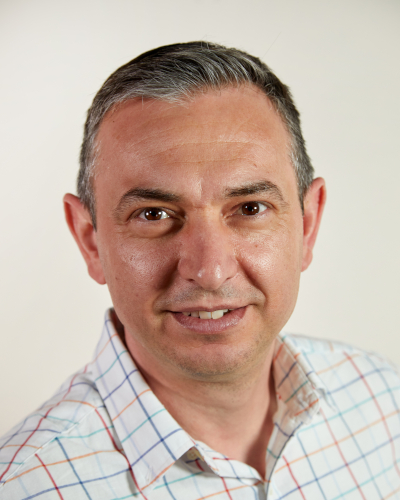 Dimitrios S. Paraforos
Dimitrios S. Paraforos
Hochschule Geisenheim University, Germany
SPECIAL SESSION DESCRIPTION
This sessopm highlights recent advances in close-range perception technologies and automation systems dedicated to specialty crops, including vineyards, orchards, berries, and other high-value perennial or horticultural crops. Contributions are invited on innovative sensing modalities, machine vision pipelines, 3D canopy modelling, and sensor fusion techniques that enable real-time crop, canopy, and microclimate monitoring. Particular emphasis is given to embedded intelligence and on-board processing supporting autonomous or semi-autonomous field operations.
The session welcomes high-quality studies addressing perception-driven automation, such as robotic manipulation, variable-rate applications, navigation in dense canopies, and high-throughput phenotyping platforms. Research integrating perception data with decision support, digital twins, or mechanistic and AI-based models is encouraged. Applications demonstrating operational readiness through prototypes, field robots, or pilot-scale automation systems in specialty crops are also highly relevant.
TOPICS
We welcome contributions that cover the following topics:
- Close-range sensing (e.g. depth and spectral sensors) for canopy and crop characterization;
- Computer vision and 3D point cloud analysis for crop geometry, abiotic or abiotic stresses, yield and quality;
- Edge computing and embedded AI for real-time perception and actuation;
- Perception-driven applications and AI model integration;
- High-throughput phenotyping and mobile platforms for breeding and trait assessment;
- System integration, calibration, and validation of multi-sensor robotic platforms;
- Case studies, prototypes, and field demonstrations from specialty crop robotics and automation testbeds.
ABOUT THE ORGANIZERS
Nikos Tsoulias Senior researcher and lecturer at Hochschule Geisenheim University. Dr. Nikos Tsoulias holds a PhD in Agricultural Engineering from the Agricultural University of Athens (Greece) since 2021. He received his M.Sc. in Precision Farming (2016) at Harper Adams University (United Kingdom) fully funded by CNH Industrial, while he holds a BSc is in Agriculture with an integrated M.Sc. in Agricultural Engineering from Agricultural University of Athens (Greece).
Currently, he works at the Department of Agricultural Engineering at Hochschule Geisenheim University, where he gives lectures on precision agriculture, phenotyping, digital twins, agricultural machines and robotics in horticulture and viticulture. From the beginning of his professional career, he worked as a researcher, and has focused on strong cooperation with the industry and research. He is an expert in machine vision and optical sensors in the agri and food sector.
Dimitrios S. Paraforos was born in Thessaloniki, Greece and grew up on a farm in Northern Greece. He completed his BSc studies in Automation Engineering at the Technological Educational Institute of Chalkida (now National and Kapodistrian University of Athens) and his MSc in Agricultural Engineering at the University of Thessaly. After working for some years in the Industry as an Automation Engineer, he joined the University of Hohenheim where he obtained his PhD (2016) and Habilitation (2020) in Agricultural Engineering. In 2018 he received the Baden-Württemberg Certificate for academic teaching, while in 2020 he was awarded the GIL prize for his Habilitation Thesis. Since April 2023 he is serving as a Full Professor of Agricultural Engineering in Special Crops at the Hochschule Geisenheim University. He is also serving as an associate editor of Computers and Electronics in Agriculture and Smart Agricultural Technology. He has been involved in more than 20 European and national research projects in the field of digitisation of agriculture and technology transfer. He is currently the coordinator of three BMLEH-funded projects, Oenotrace, ISObot and iSoBeD which focus on the implementation and traceability of sustainable cultivation practices in specialty crops. His research interests include the automation of agricultural machinery, unmanned ground and air vehicles and decentralised and resilient digital farming systems.