SPECIAL SESSION #15
Advanced and Sustainable Sensors and Transducers for Smart Agriculture and Environmental Monitoring
ORGANIZED BY
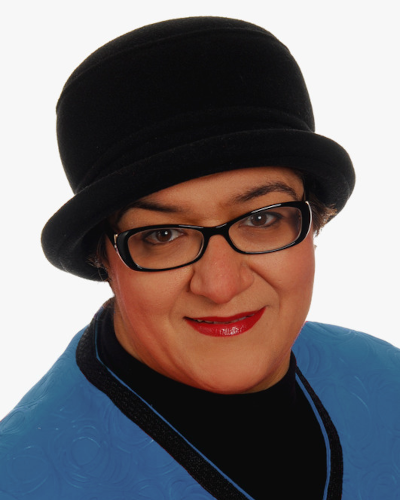 Olfa Kanoun
Olfa Kanoun
Chemnitz University of Technology
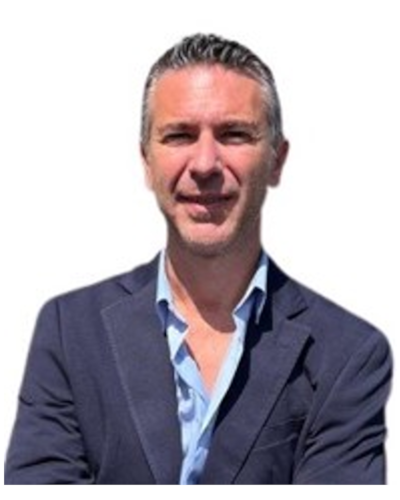 Carlo Trigona
Carlo Trigona
University of Catania, Italy
SPECIAL SESSION DESCRIPTION
Monitoring plant health, soil conditions, and water quality are key challenges in modern precision agriculture and environmental management. This special session addresses the growing need for advanced, sensitive, and sustainable sensing technologies capable of operating in-situ and in real-world agricultural and environmental settings.
The session covers a broad range of sensing technologies, transducers and systems for agriculture and environmental monitoring, including physical, chemical, and biological sensors, multi-sensor systems, sensor networks, and IoT-enabled platforms for field deployment. It welcomes contributions spanning the full chain from sensor design and materials to measurement systems, data acquisition, signal processing, and real-world applications.
A particular focus is placed on sustainable and green sensing technologies, including biodegradable sensor materials, bio-inspired transducers, flexible and printed electrodes, sensors and sensing systems based on living organisms. All methodologies for sustainability enhancement on system level are also welcome including low-power sensing and and energy harvesting as well as low-power connectivity.
TOPICS
Topics of interest include, but are not limited to:
- Physical, chemical, and biological sensors;
- Electrochemical sensors for soil, plant, and water analysis;
- Impedance and bioimpedance spectroscopy systems;
- Green, biodegradable, and bio-inspired sensing technologies;
- Flexible, printed, and nanocomposite sensor materials;
- Energy harvesting and autonomous sensor systems for field deployment;
- Self-powered and battery-less sensor nodes for long-term monitoring;
- Miniaturized, portable, and wireless sensor systems;
- Sensor networks and IoT platforms for precision agriculture;
- Signal processing, calibration, and measurement uncertainty;
- Applications in plant physiology, soil science, water quality, and forestry monitoring.
ABOUT THE ORGANIZERS
Prof. Dr.-Ing. Olfa Kanoun is a Full Professor at Chemnitz University of Technology and has 30 years of experience of research in the field of sensors and sensor systems with a focus on impedance spectroscopy, energy-autonomous wireless sensors, and nanocomposite enhanced flexible sensors. She leads the professorship Measurement and Sensor Technology (MST) at TU Chemnitz and has supervised more than 50 researchers in PhD. She authored and coauthored more than 800 peer-reviewed papers and chaired more than 50 conferences and workshops. Prof. Kanoun has been consistently ranked among the Top 2% of scientists in the world and received the faculty course award in 2018 and the Technical Award in 2022 by the IEEE IM Society.
Professor Carlo Trigona received his M.S. (cum laude) in Automation Engineering in 2006 and his Ph.D. in 2010 from the University of Catania. After research appointments in France, Germany, and Italy, he joined the University of Catania, where he is currently Associate Professor, Director’s Delegate for Research and President of the M.Sc. in Electrical Engineering for Sustainable Green Energy Transition. He received the IEEE I&M Outstanding Young Engineer Award (2020), the IEEE I&M Best Application Award (2023), and the IAAM Scientist Medal (2024). He has authored over 350 publications with more than 3500 citations. His research focuses on sensors, energy harvesting, MEMS, and green, biodegradable technologies inspired by living organisms.